January 23
January 23 is the 23rd day of the year in the Gregorian calendar; 343 days remain until the year's end. It falls in winter (northern hemisphere) and under the astrological sign of Aquarius.
External references
Curated jump-off points to the major almanacs, encyclopaedias and primary sources for this date.
Astronomy
On January 23 the Sun's declination is approximately -19.7°. At this latitude the Sun is south of the celestial equator, giving the Northern Hemisphere shorter days than nights.
For specific rise/set times at your location, see the U.S. Naval Observatory, or the NASA APOD archive for any imagery published on a January 23.
Position in the year
Holidays & observances
No widely-observed holidays catalogued for this day in our base set. See the external almanacs above for region-specific observances.
Events
A selection of widely-documented historical events that took place on this date. Years marked BCE follow standard astronomical convention.
 1556 — The deadliest earthquake in recorded history, the Shaanxi earthquake, struck China, killing an estimated 830,000 people. ↗(470 years ago)
more
One of the deadliest earthquakes in history occurred in the early morning of 23 January, 1556 in Huaxian, Shaanxi, during the Ming dynasty.
 1789 — Georgetown University, the first Catholic university in the United States, was founded. ↗(237 years ago)
more
Georgetown University is a private Jesuit research university in Washington, D.C., United States. Founded by Bishop John Carroll in 1789, it is the oldest Catholic institution of higher education in the United States, the oldest university in Washington, D.C., and the nation's first federally chartered university.
 1849 — Elizabeth Blackwell became the first woman to receive a medical degree in the United States. ↗(177 years ago)
more
Elizabeth Blackwell was an English-American physician, notable as the first woman to earn a medical degree in the United States, and the first woman on the Medical Register of the General Medical Council for the United Kingdom.
 1957 — American inventor Walter Frederick Morrison sold the rights to his flying disc — the Frisbee. ↗(69 years ago)
more
A frisbee, also called a flying disc or simply a disc, is a gliding toy or sporting item generally made of injection-molded plastic and roughly 20 to 25 centimetres in diameter with a pronounced lip. It is used recreationally and competitively for throwing and catching, as in flying disc games.
Notable births
 1737 — John Hancock, U.S. Founding Father. ↗(289 years ago)
more
John Hancock was an American Founding Father, merchant, statesman, and prominent Patriot of the American Revolution. He was the longest-serving president of the Continental Congress, having served as the second president of the Second Continental Congress and the seventh president of the Congress of the Confederation.
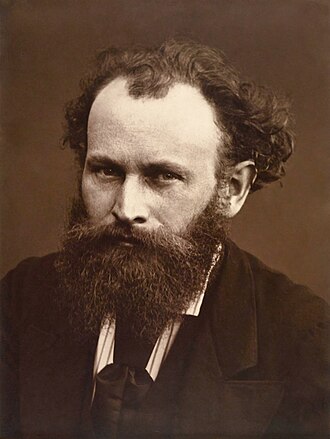 1832 — Édouard Manet, French painter. ↗(194 years ago)
more
Édouard Manet was a French modernist painter. He was one of the first 19th-century artists to paint modern life, as well as a pivotal figure in the transition from Realism to Impressionism.
 1944 — Rutger Hauer, Dutch actor. ↗(82 years ago)
more
Rutger Oelsen Hauer was a Dutch actor, with a career that spanned over 170 roles across nearly 50 years, beginning in 1969. In 1999, he was named by the Dutch public as the Best Dutch Actor of the Century.
Notable deaths
 1989 — Salvador Dalí, Spanish surrealist painter. ↗(37 years ago)
more
Salvador Domingo Felipe Jacinto Dalí i Domènech, Marquess of Dalí de Púbol, known as Salvador Dalí, was a Spanish surrealist artist renowned for his technical skill, precise draftsmanship, and the striking and bizarre images in his work.
Numerical & calendrical curiosities
| Day-of-year (23) | 23 · prime |
|---|---|
| Days remaining (343) | 7^3 |
| Date code DDMMYYYY | 23012026 · no palindrome in next 200 years |
| Sun declination | -19.70° (Cooper approximation) |
| Distance from solstice | 34 days |