April 23
April 23 is the 114th day of the year in the Gregorian calendar; 252 days remain until the year's end. It falls in spring (northern hemisphere) and under the astrological sign of Taurus.
External references
Curated jump-off points to the major almanacs, encyclopaedias and primary sources for this date.
Astronomy
On April 23 the Sun's declination is approximately +12.6°. At this latitude the Sun is north of the celestial equator, giving the Northern Hemisphere longer days than nights.
For specific rise/set times at your location, see the U.S. Naval Observatory, or the NASA APOD archive for any imagery published on a April 23.
Position in the year
Holidays & observances
- Saint George's Day (England)
- World Book and Copyright Day (UNESCO)
Events
A selection of widely-documented historical events that took place on this date. Years marked BCE follow standard astronomical convention.
 1014 — At the Battle of Clontarf, the Irish High King Brian Boru defeated Norse forces (and was killed). ↗(1012 years ago)
more
The Battle of Clontarf took place on 23 April 1014 at Clontarf, near Dublin, on the east coast of Ireland. It pitted an army led by Brian Boru, High King of Ireland, against a Norse-Irish alliance comprising the forces of Sigtrygg Silkbeard, King of Dublin; Máel Mórda mac Murchada, King of Leinster; and a Viking army from abroad led by Sigurd of Orkney an...
 1564 — William Shakespeare was born in Stratford-upon-Avon (traditional date). ↗(462 years ago)
more
William Shakespeare was an English playwright, poet and actor. He is widely regarded as the greatest writer in the English language and the world's pre-eminent dramatist. He is often called England's national poet and the "Bard of Avon" or simply "the Bard".
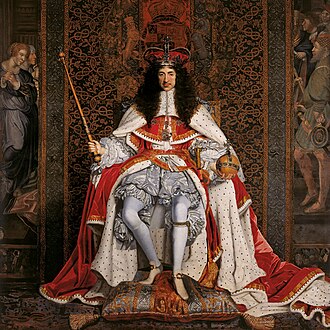 1660 — Charles II of England returned to London, restoring the monarchy. ↗(366 years ago)
more
The Stuart Restoration was the return in May 1660 of the Stuart monarchy to the kingdoms of England, Scotland, and Ireland, ending the Interregnum and the Commonwealth of England that had been established after the execution of Charles I in January 1649.
 1985 — Coca-Cola unveiled "New Coke" — a marketing disaster that lasted 79 days. ↗(41 years ago)
more
New Coke was the unofficial name of the controversial reformulation of the soft drink Coca-Cola, introduced by the Coca-Cola Company to the United States market in April 1985. It was renamed Coke II in 1990 and was discontinued in July 2002.
Notable births
- 1564 — William Shakespeare (traditional date). ↗(462 years ago)
more
William Shakespeare was an English playwright, poet and actor. He is widely regarded as the greatest writer in the English language and the world's pre-eminent dramatist. He is often called England's national poet and the "Bard of Avon" or simply "the Bard".
 1791 — James Buchanan, 15th U.S. President. ↗(235 years ago)
more
James Buchanan Jr. was the 15th president of the United States, serving from 1857 to 1861. He also served as the 17th United States secretary of state from 1845 to 1849 and represented Pennsylvania in both houses of the U.S. Congress.
Notable deaths
- 1616 — William Shakespeare. ↗(410 years ago)
more
William Shakespeare was an English playwright, poet and actor. He is widely regarded as the greatest writer in the English language and the world's pre-eminent dramatist. He is often called England's national poet and the "Bard of Avon" or simply "the Bard".
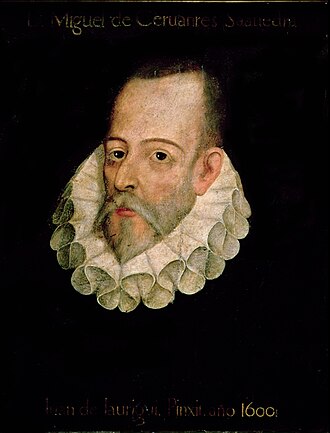 1616 — Miguel de Cervantes, Spanish author (Don Quixote) — same date, different calendar. ↗(410 years ago)
more
Miguel de Cervantes Saavedra was a Spanish writer widely regarded as the greatest writer in the Spanish language and one of the world's pre-eminent novelists. He is best known for his two-part novel Don Quixote, a work considered to be the first modern novel.
Numerical & calendrical curiosities
| Day-of-year (114) | 2 × 3 × 19 · composite (no) |
|---|---|
| Days remaining (252) | 2^2 × 3^2 × 7 |
| Date code DDMMYYYY | 23042026 · no palindrome in next 200 years |
| Sun declination | +12.61° (Cooper approximation) |
| Distance from solstice | 58 days |