February 9
February 9 is the 40th day of the year in the Gregorian calendar; 326 days remain until the year's end. It falls in winter (northern hemisphere) and under the astrological sign of Aquarius.
External references
Curated jump-off points to the major almanacs, encyclopaedias and primary sources for this date.
Astronomy
On February 9 the Sun's declination is approximately -15.2°. At this latitude the Sun is south of the celestial equator, giving the Northern Hemisphere shorter days than nights.
For specific rise/set times at your location, see the U.S. Naval Observatory, or the NASA APOD archive for any imagery published on a February 9.
Position in the year
Holidays & observances
No widely-observed holidays catalogued for this day in our base set. See the external almanacs above for region-specific observances.
Events
A selection of widely-documented historical events that took place on this date. Years marked BCE follow standard astronomical convention.
 1825 — After no presidential candidate received a majority of electoral votes, the U.S. House of Representatives elected John Quincy Adams President. ↗(201 years ago)
more
Presidential elections were held in the United States from October 26 to December 2, 1824. Andrew Jackson, John Quincy Adams, Henry Clay and William Crawford were the primary contenders for the presidency. The result of the election was inconclusive, as no candidate won a majority of the electoral vote. In the election for vice president, John C.
 1870 — The U.S. National Weather Service was established. ↗(156 years ago)
more
The National Weather Service (NWS) is an agency of the United States federal government that is tasked with providing weather forecasts, warnings of hazardous weather, and other weather-related products to organizations and the public for the purposes of protection, safety, and general information.
 1942 — Year-round daylight saving time was reimposed in the United States as a wartime measure ("War Time"). ↗(84 years ago)
more
On November 18, 1883, United States and Canadian railroads instituted standard time in time zones. Before then, time of day was a local matter, and most cities and towns used some form of local solar time, maintained by some well-known clock. The standard time system was not immediately embraced by all. Standard time in time zones was established in U.S.
- 1964 — The Beatles made their first appearance on The Ed Sullivan Show, watched by an estimated 73 million viewers. ↗(62 years ago)
 1986 — Halley's Comet last reached perihelion in its current 76-year orbit. ↗(40 years ago)
more
Halley's Comet is the only known short-period comet that is consistently visible to the naked eye from Earth, appearing every 72–80 years, though with the majority of recorded apparitions occurring after 75–77 years. It last appeared in the inner parts of the Solar System in 1986 and will next appear in mid-2061.
Notable births
 1773 — William Henry Harrison, 9th U.S. President. ↗(253 years ago)
more
William Henry Harrison was the ninth president of the United States, serving from March to April 1841. He died 31 days into his term, making him the shortest serving president and the first one to die in office.
 1944 — Alice Walker, American author (The Color Purple). ↗(82 years ago)
more
Alice Malsenior Tallulah-Kate Walker is an American novelist, short story writer, poet, and social activist. In 1982, she became the first African-American woman to win the Pulitzer Prize for Fiction, which she was awarded for her novel The Color Purple.
Notable deaths
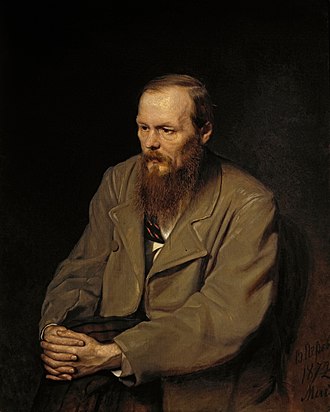 1881 — Fyodor Dostoevsky, Russian novelist. ↗(145 years ago)
more
Fyodor Mikhailovich Dostoevsky was a Russian philosopher, novelist, short story writer, essayist and journalist. He is regarded as one of the greatest novelists in both Russian and world literature, and many of his works are considered highly influential masterpieces.
Numerical & calendrical curiosities
| Day-of-year (40) | 2^3 × 5 · composite (no) |
|---|---|
| Days remaining (326) | 2 × 163 |
| Date code DDMMYYYY | 09022026 · next palindrome year: 2090 |
| Sun declination | -15.20° (Cooper approximation) |
| Distance from solstice | 51 days |