March 11
March 11 is the 71st day of the year in the Gregorian calendar; 295 days remain until the year's end. It falls in winter (northern hemisphere) and under the astrological sign of Pisces.
External references
Curated jump-off points to the major almanacs, encyclopaedias and primary sources for this date.
Astronomy
On March 11 the Sun's declination is approximately -4.0°. At this latitude the Sun is south of the celestial equator, giving the Northern Hemisphere shorter days than nights.
For specific rise/set times at your location, see the U.S. Naval Observatory, or the NASA APOD archive for any imagery published on a March 11.
Position in the year
Holidays & observances
No widely-observed holidays catalogued for this day in our base set. See the external almanacs above for region-specific observances.
Events
A selection of widely-documented historical events that took place on this date. Years marked BCE follow standard astronomical convention.
 1851 — Verdi's Rigoletto premiered in Venice. ↗(175 years ago)
more
Rigoletto is an opera in three acts by Giuseppe Verdi. The Italian libretto was written by Francesco Maria Piave based on the 1832 play Le roi s'amuse by Victor Hugo. Despite serious initial problems with the Austrian censors who had control over northern Italian theatres at the time, the opera had a triumphant premiere at La Fenice in Venice on 11 March ...
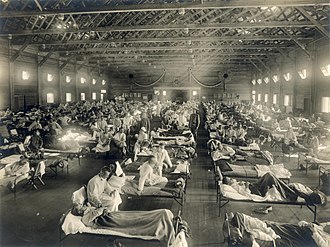 1918 — The first cases of the so-called Spanish flu were observed at Fort Riley, Kansas. ↗(108 years ago)
more
The 1918–1920 flu pandemic, also known as the Great Influenza epidemic or by the misleading name Spanish flu, was an exceptionally deadly global influenza pandemic caused by the H1N1 subtype of the influenza A virus.
 1985 — Mikhail Gorbachev was elected General Secretary of the Communist Party of the Soviet Union. ↗(41 years ago)
more
Mikhail Sergeyevich Gorbachev was a Soviet and Russian politician who was the last leader of the Soviet Union from 1985 until the country's dissolution in 1991. He served as General Secretary of the Communist Party from 1985, and additionally as head of state from 1988.
 2004 — Coordinated bombings on commuter trains in Madrid killed 191 people. ↗(22 years ago)
more
The 2004 Madrid train bombings were a series of coordinated, nearly simultaneous bombings against the Cercanías commuter train system of Madrid, Spain, on the morning of 11 March 2004—three days before Spain's general elections. The explosions killed 193 people and injured around 2,500.
 2011 — A magnitude-9.1 earthquake and tsunami struck Tōhoku, Japan, killing more than 19,000 and triggering the Fukushima nuclear disaster. ↗(15 years ago)
more
On 11 March 2011, at 14:46:24 JST, a Mw 9.0–9.1 undersea megathrust earthquake occurred in the Pacific Ocean, 72 km (45 mi) east of the Oshika Peninsula of the Tōhoku region of Japan. It lasted approximately six minutes and caused a tsunami. It is sometimes known in Japan as the "Great East Japan Earthquake Disaster" , among other names.
Notable births
 1916 — Harold Wilson, British Prime Minister. ↗(110 years ago)
more
James Harold Wilson, Baron Wilson of Rievaulx, was a British politician who twice served as Prime Minister of the United Kingdom, from 1964 to 1970 and from 1974 to 1976. He was Leader of the Labour Party from 1963 to 1976, Leader of the Opposition twice from 1963 to 1964 and again from 1970 to 1974, and a Member of Parliament (MP) from 1945 to 1983.
 1952 — Douglas Adams, English author (The Hitchhiker's Guide to the Galaxy). ↗(74 years ago)
more
Douglas Noël Adams was an English author, humourist, and screenwriter. He was best known as the creator of The Hitchhiker's Guide to the Galaxy, a 1978 radio comedy series which he adapted into a "trilogy" of five books that sold over 14 million copies in his lifetime.
Notable deaths
 1955 — Alexander Fleming, Scottish biologist who discovered penicillin. ↗(71 years ago)
more
Sir Alexander Fleming was a Scottish physician and microbiologist. He shared the 1945 Nobel Prize in Physiology or Medicine with Howard Florey and Ernst Chain "for the discovery of penicillin and its curative effect in various infectious diseases". This was the first antibiotic substance discovered.
Numerical & calendrical curiosities
| Day-of-year (71) | 71 · prime |
|---|---|
| Days remaining (295) | 5 × 59 |
| Date code DDMMYYYY | 11032026 · no palindrome in next 200 years |
| Sun declination | -4.02° (Cooper approximation) |
| Distance from solstice | 82 days |