June 6
June 6 is the 158th day of the year in the Gregorian calendar; 208 days remain until the year's end. It falls in spring (northern hemisphere) and under the astrological sign of Gemini.
External references
Curated jump-off points to the major almanacs, encyclopaedias and primary sources for this date.
Astronomy
On June 6 the Sun's declination is approximately +22.7°. At this latitude the Sun is north of the celestial equator, giving the Northern Hemisphere longer days than nights.
For specific rise/set times at your location, see the U.S. Naval Observatory, or the NASA APOD archive for any imagery published on a June 6.
Position in the year
Holidays & observances
- National Day (Sweden)
- D-Day (commemoration of 1944 Normandy landings)
Events
A selection of widely-documented historical events that took place on this date. Years marked BCE follow standard astronomical convention.
 1683 — The Ashmolean Museum opened at Oxford as the world's first university museum. ↗(343 years ago)
more
The Ashmolean Museum of Art and Archaeology on Beaumont Street in Oxford, England, is Britain's first public museum. Its first building was erected in 1678–1683 to house the cabinet of curiosities that Elias Ashmole gave to the University of Oxford in 1677.
 1844 — The Young Men's Christian Association (YMCA) was founded in London. ↗(182 years ago)
more
YMCA, sometimes regionally called the Y, is a worldwide youth organization based in Vernier, Canton of Geneva, Switzerland, with more than 64 million beneficiaries in 120 countries. It has nearly 90,000 staff, some 920,000 volunteers and 12,000 branches worldwide.
 1933 — The first drive-in cinema opened in Camden, New Jersey. ↗(93 years ago)
more
A drive-in theater/theatre or drive-in cinema is a form of cinema structure consisting of a large outdoor movie screen, a projection booth, a concession stand, and a large parking area for automobiles. Within this enclosed area, customers can view movies from the privacy and comfort of their cars.
 1944 — D-Day: Allied forces landed in Normandy, beginning the liberation of Western Europe from Nazi Germany. ↗(82 years ago)
more
The Normandy landings were the landing operations and associated airborne operations on 6 June 1944 of the Allied invasion of Normandy in Operation Overlord during the Second World War. Codenamed Operation Neptune and often referred to as D-Day, it is the largest seaborne invasion in history.
Notable births
 1799 — Alexander Pushkin, Russian poet. ↗(227 years ago)
more
Alexander Sergeyevich Pushkin was a Russian poet, playwright, and novelist of the Romantic era. He is considered by many to be the greatest Russian poet, as well as the founder of modern Russian literature.
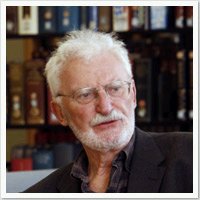 1933 — Heinrich Rohrer, Swiss physicist and Nobel laureate. ↗(93 years ago)
more
Heinrich Rohrer was a Swiss physicist who shared half of the 1986 Nobel Prize in Physics with Gerd Binnig for the design of the scanning tunneling microscope (STM). The other half of the Prize was awarded to Ernst Ruska.
Notable deaths
 1968 — Robert F. Kennedy, U.S. Senator. ↗(58 years ago)
more
Robert Francis Kennedy, also known by his initials RFK, was an American politician and lawyer. A member of the Democratic Party, Kennedy served as the 64th United States attorney general from 1961 to 1964, and as a U.S. senator from New York from 1965 until his assassination in 1968. Like his brothers John F.
Numerical & calendrical curiosities
| Day-of-year (158) | 2 × 79 · composite (no) |
|---|---|
| Days remaining (208) | 2^4 × 13 |
| Date code DDMMYYYY | 06062026 · no palindrome in next 200 years |
| Sun declination | +22.74° (Cooper approximation) |
| Distance from solstice | 14 days |