January 25
January 25 is the 25th day of the year in the Gregorian calendar; 341 days remain until the year's end. It falls in winter (northern hemisphere) and under the astrological sign of Aquarius.
External references
Curated jump-off points to the major almanacs, encyclopaedias and primary sources for this date.
Astronomy
On January 25 the Sun's declination is approximately -19.3°. At this latitude the Sun is south of the celestial equator, giving the Northern Hemisphere shorter days than nights.
For specific rise/set times at your location, see the U.S. Naval Observatory, or the NASA APOD archive for any imagery published on a January 25.
Position in the year
Holidays & observances
- Burns Night (Scotland)
- Conversion of Saint Paul (Christian)
Events
A selection of widely-documented historical events that took place on this date. Years marked BCE follow standard astronomical convention.
 1533 — Henry VIII secretly married Anne Boleyn. ↗(493 years ago)
more
Anne Boleyn was Queen of England from 1533 to 1536, as the second wife of King Henry VIII. The circumstances of her marriage and execution, by beheading for treason, made her a key figure in the political and religious upheaval that marked the start of the English Reformation.
 1858 — The Wedding March from Mendelssohn's A Midsummer Night's Dream was first played at the wedding of Princess Victoria. ↗(168 years ago)
more
Felix Mendelssohn's "Wedding March" in C major, written in 1842, is one of the best known of the pieces from his suite of incidental music to Shakespeare's play A Midsummer Night's Dream. It is one of the most frequently used wedding marches, generally being played on a church pipe organ.
 1924 — The first Winter Olympic Games opened in Chamonix, France. ↗(102 years ago)
more
The 1924 Winter Olympics, officially known as the I Olympic Winter Games and commonly known as Chamonix 1924, were a winter multi-sport event which was held in 1924 in Chamonix, France. Organized by the French Olympic Committee and held as part of an "International Winter Sports Week", the competitions took place in Chamonix and Haute-Savoie, France, from...
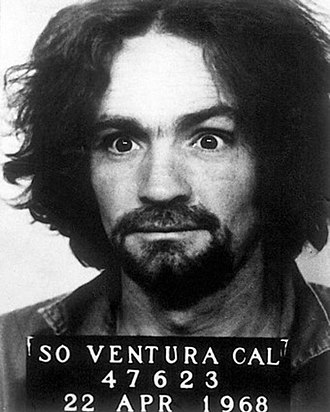 1971 — Charles Manson and three women were convicted of the Tate–LaBianca murders. ↗(55 years ago)
more
The Manson Family was a commune, gang and cult led by criminal Charles Manson that was active in California in the late 1960s and early 1970s. The description of the group as a “Family” was figurative, rather than literal; the group was not known to contain any members of Charles Manson’s actual family.
Notable births
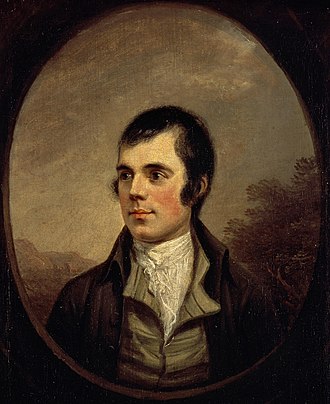 1759 — Robert Burns, Scottish poet (Auld Lang Syne). ↗(267 years ago)
more
Robert Burns, also known familiarly as Rabbie Burns, was a Scottish poet and lyricist. He is widely regarded as the national poet of Scotland and is celebrated worldwide. He is the best known of the poets who have written in the Scots language, although much of his writing is in a "light Scots dialect" of English, accessible to an audience beyond Scotland.
 1882 — Virginia Woolf, English novelist. ↗(144 years ago)
more
Adeline Virginia Woolf was an English writer and one of the most influential 20th-century modernist authors. She helped to pioneer the use of stream of consciousness narration as a literary device.
Notable deaths
 1947 — Al Capone, American gangster. ↗(79 years ago)
more
Alphonse Gabriel Capone, sometimes known by the nickname "Scarface", was an American gangster and businessman who attained notoriety during the Prohibition era as the co-founder and boss of the Chicago Outfit from 1925 to 1931. His seven-year reign as a crime boss ended when he was imprisoned at the age of 33.
Numerical & calendrical curiosities
| Day-of-year (25) | 5^2 · composite (no) |
|---|---|
| Days remaining (341) | 11 × 31 |
| Date code DDMMYYYY | 25012026 · no palindrome in next 200 years |
| Sun declination | -19.26° (Cooper approximation) |
| Distance from solstice | 36 days |