January 2
January 2 is the 2nd day of the year in the Gregorian calendar; 364 days remain until the year's end. It falls in winter (northern hemisphere) and under the astrological sign of Capricorn.
External references
Curated jump-off points to the major almanacs, encyclopaedias and primary sources for this date.
Astronomy
On January 2 the Sun's declination is approximately -22.9°. At this latitude the Sun is south of the celestial equator, giving the Northern Hemisphere shorter days than nights.
For specific rise/set times at your location, see the U.S. Naval Observatory, or the NASA APOD archive for any imagery published on a January 2.
Position in the year
Holidays & observances
- Berchtoldstag (Switzerland, parts)
- Day after New Year's (NZ, Scotland)
Events
A selection of widely-documented historical events that took place on this date. Years marked BCE follow standard astronomical convention.
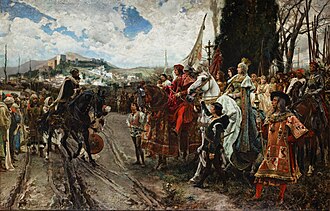 1492 — The fall of Granada — Catholic Monarchs Ferdinand II and Isabella I completed the Reconquista. ↗(534 years ago)
more
The Granada War was a series of military campaigns between 1482 and 1492 during the reign of the Catholic Monarchs, Isabella I of Castile and Ferdinand II of Aragon, against the Nasrid dynasty's Emirate of Granada. It ended with the defeat of Granada and its annexation by Castile, ending the last remnant of Islamic rule on the Iberian peninsula.
 1788 — Georgia became the fourth U.S. state to ratify the Constitution. ↗(238 years ago)
more
Georgia is a state in the Southeastern, South Atlantic, and Deep South regions of the United States. It borders Tennessee to the northwest, North Carolina and South Carolina to the northeast, the Atlantic Ocean to the east, Florida to the south, and Alabama to the west. Of the 50 U.S. states, Georgia is the 24th-largest by area and eighth-most populous.
 1900 — U.S. Secretary of State John Hay announced the Open Door Policy on China. ↗(126 years ago)
more
The Open Door Policy was the United States diplomatic policy established in the late 19th and early 20th century that called for a system of equal trade and investment and to guarantee the territorial integrity of Qing China. The policy was created in U.S.
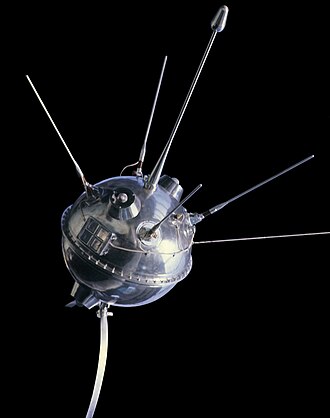 1959 — The Soviet Union launched Luna 1, the first spacecraft to leave Earth's gravity well. ↗(67 years ago)
more
Luna 1, also known as Mechta, E-1 No.4 and First Lunar Rover, was the first spacecraft to reach the vicinity of Earth's Moon, the first spacecraft to leave Earth's orbit, and the first to be placed in heliocentric orbit. Luna 1 was launched as part of the Soviet Luna programme in 1959.
 1971 — 66 football fans were crushed to death at Ibrox Stadium, Glasgow. ↗(55 years ago)
more
The 1971 Ibrox disaster, also known as the Second Ibrox Disaster, was a crush among the crowd at an Old Firm football game, which led to 66 deaths and more than 200 injuries. It happened on 2 January 1971 on an exit stairway at Ibrox Park in Glasgow, Scotland.
Notable births
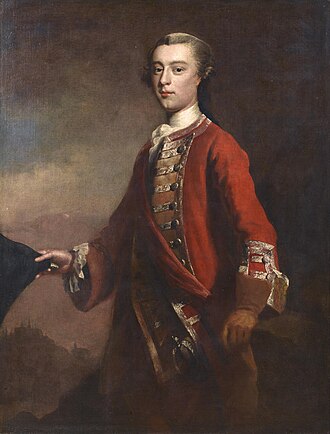 1727 — James Wolfe, British general who captured Quebec in 1759. ↗(299 years ago)
more
Major-General James Wolfe was a British Army officer known for his training reforms and, as a major general, remembered chiefly for his victory in 1759 over the French at the Battle of the Plains of Abraham in Quebec, in the final moments of which he was killed in action.
 1873 — Thérèse of Lisieux, French Carmelite and Catholic saint. ↗(153 years ago)
more
Thérèse of Lisieux, in religion Therese of the Child Jesus and the Holy Face, was a French Discalced Carmelite who is widely venerated in modern times. She is popularly known in English as the Little Flower of Jesus, or simply the Little Flower, and in French as la petite Thérèse.
 1920 — Isaac Asimov, Russian-American writer and biochemist (Foundation, I, Robot). ↗(106 years ago)
more
Isaac Asimov was an American writer and professor of biochemistry at Boston University. During his lifetime, Asimov was considered one of the "Big Three" science fiction writers, along with Robert A. Heinlein and Arthur C. Clarke. He wrote or edited more than 500 books. He also wrote an estimated 90,000 letters and postcards.
Notable deaths
 1892 — George Biddell Airy, English Astronomer Royal. ↗(134 years ago)
more
Sir George Biddell Airy was an English mathematician and astronomer, as well as the Lucasian Professor of Mathematics from 1826 to 1828 and the seventh Astronomer Royal from 1835 to 1881. His many achievements include work on planetary orbits, measuring the mean density of the Earth, a method of solution of two-dimensional problems in solid mechanics and,...
 1974 — Tex Ritter, American singing cowboy and actor. ↗(52 years ago)
more
Woodward Maurice "Tex" Ritter was an American country music singer and actor. He was the patriarch of the Ritter acting family. He is a member of the Country Music Hall of Fame.
Numerical & calendrical curiosities
| Day-of-year (2) | 2 · prime |
|---|---|
| Days remaining (364) | 2^2 × 7 × 13 |
| Date code DDMMYYYY | 02012026 · no palindrome in next 200 years |
| Sun declination | -22.92° (Cooper approximation) |
| Distance from solstice | 13 days |