February 18
February 18 is the 49th day of the year in the Gregorian calendar; 317 days remain until the year's end. It falls in winter (northern hemisphere) and under the astrological sign of Aquarius.
External references
Curated jump-off points to the major almanacs, encyclopaedias and primary sources for this date.
Astronomy
On February 18 the Sun's declination is approximately -12.3°. At this latitude the Sun is south of the celestial equator, giving the Northern Hemisphere shorter days than nights.
For specific rise/set times at your location, see the U.S. Naval Observatory, or the NASA APOD archive for any imagery published on a February 18.
Position in the year
Holidays & observances
No widely-observed holidays catalogued for this day in our base set. See the external almanacs above for region-specific observances.
Events
A selection of widely-documented historical events that took place on this date. Years marked BCE follow standard astronomical convention.
 1861 — Jefferson Davis was inaugurated as Provisional President of the Confederate States of America. ↗(165 years ago)
more
Jefferson F. Davis was the only president of the Confederate States from 1861 to 1865, leading the Confederacy during the American Civil War. Before the war, he was a member of the Democratic Party who represented Mississippi in the House of Representatives from 1845 to 1846 and in the United States Senate from 1857 to 1861.
 1885 — Mark Twain's Adventures of Huckleberry Finn was published in the United States. ↗(141 years ago)
more
Adventures of Huckleberry Finn is a picaresque novel by American author Mark Twain that was first published in the United Kingdom in December 1884 and in the United States in February 1885. It is commonly named among the Great American Novels, and it is among the first in major American literature to be written throughout in vernacular English, characteri...
 1930 — American astronomer Clyde Tombaugh discovered Pluto at Lowell Observatory in Flagstaff, Arizona. ↗(96 years ago)
more
Pluto is a dwarf planet in the Kuiper belt, a ring of bodies beyond the orbit of Neptune. It is the ninth-largest and tenth-most-massive known object to directly orbit the Sun. It is the largest known trans-Neptunian object by volume by a small margin, but is less massive than Eris.
 2001 — FBI agent Robert Hanssen was arrested for selling secrets to the Soviet Union and Russia. ↗(25 years ago)
more
Robert Philip Hanssen was an American Federal Bureau of Investigation (FBI) agent who spied for Soviet and Russian intelligence services off and on against the United States from 1979 to 2001. His espionage was described by the U.S. Department of Justice as "possibly the worst intelligence disaster in U.S. history".
Notable births
 1745 — Alessandro Volta, Italian physicist. ↗(281 years ago)
more
Alessandro Giuseppe Antonio Anastasio Volta was an Italian chemist and physicist who was a pioneer of electricity and power, and is credited as the inventor of the electric battery and the discoverer of methane.
 1933 — Yoko Ono, Japanese-American artist and musician. ↗(93 years ago)
more
Yoko Ono is a Japanese artist, musician, activist, and filmmaker. Her work also encompasses performance art and filmmaking.
 1954 — John Travolta, American actor. ↗(72 years ago)
more
John Joseph Travolta is an American actor. He began acting in television before transitioning into a leading man in films. His accolades include a Primetime Emmy Award and three Golden Globe Awards, in addition to nominations for two Academy Awards, a British Academy Film Award, and three Screen Actors Guild Awards.
Notable deaths
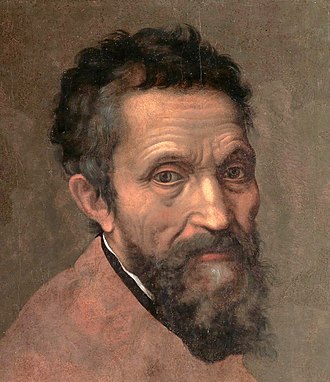 1564 — Michelangelo, Italian Renaissance sculptor and painter. ↗(462 years ago)
more
Michelangelo di Lodovico Buonarroti Simoni, known mononymously as Michelangelo, was an Italian sculptor, painter, architect, and poet of the High Renaissance. He was born in the Republic of Florence but was mostly active in Rome from his 30s onwards. His work was inspired by models from classical antiquity and had a lasting influence on Western art.
 1967 — J. Robert Oppenheimer, American theoretical physicist. ↗(59 years ago)
more
J. Robert Oppenheimer was an American theoretical physicist who served as the director of the Manhattan Project's Los Alamos Laboratory during World War II. He is often called the "father of the atomic bomb" for his role in overseeing the development of the first nuclear weapons.
Numerical & calendrical curiosities
| Day-of-year (49) | 7^2 · composite (no) |
|---|---|
| Days remaining (317) | 317 |
| Date code DDMMYYYY | 18022026 · next palindrome year: 2081 |
| Sun declination | -12.27° (Cooper approximation) |
| Distance from solstice | 60 days |